A strong site supervisor can make a mediocre placement excellent — and a weak one can make a good placement fail fast. Here's a practical, low-burden way to train workplace supervisors in about an hour, plus a 60-minute agenda, a one-page cheat sheet, and a 30-day launch plan.
A lot of work-based learning programs spend enormous time recruiting employers and then almost no time training the people who actually supervise students.
That's backwards.
A strong site supervisor can make a mediocre placement excellent. A weak supervisor can make a good placement fail fast. And because most supervisors are busy, they're usually promoted into the mentor role with zero preparation beyond "be nice to the student."
That is not enough.
If you want better attendance, stronger skill development, fewer behavior issues, and less coordinator fire-drill work, mentor training is one of the highest-return things you can build into your WBL system.
This article gives you a practical, low-burden way to train workplace supervisors in about an hour — without turning them into teachers, compliance experts, or unpaid counselors.
Why Mentor Training Matters
Workplace supervisors are not just warm bodies at a host site. They are the student's daily guide, feedback source, safety monitor, and often the deciding factor in whether a placement succeeds.
When supervisors are trained, you usually see:
- Better student attendance and punctuality
- Clearer expectations at the worksite
- Fewer communication breakdowns
- More accurate skill feedback
- Stronger student confidence and persistence
- Better employer retention from year to year
When supervisors are untrained, you usually see the opposite:
- "I thought the student knew what to do."
- "I didn't realize they were supposed to check in with you."
- "We gave them busy work because we weren't sure how to use them."
- "The student wasn't a good fit" when the issue was really supervision, not student capability
The coordinator ends up cleaning up avoidable messes. Mentor training reduces that load.
What the Supervisor Actually Needs to Know
Don't overcomplicate this. A workplace supervisor usually needs only five things:
- What the student is supposed to learn
- What the student is allowed and not allowed to do
- How to give feedback to a young person
- Who to call when there's a problem
- How to document progress without feeling like they're doing school paperwork
That's the heart of the training.
The 60-Minute Training Agenda
You can deliver this live, in person, on Zoom, or as a recorded onboarding video with a follow-up call. The format matters less than the clarity.
0:00–0:10 — Welcome and why the placement exists
Start with:
- Who the students are
- What pathway they're in
- What the placement is meant to accomplish
- How the employer benefits
Keep this practical. Supervisors care more about what they're expected to do than your district mission statement.
0:10–0:20 — Student expectations and program rules
Cover:
- Age and work-hour limitations if minors are involved
- Attendance expectations
- Dress code and PPE requirements
- Behavior expectations
- Confidentiality and FERPA-related boundaries
- Communication protocol for lateness, absences, or concerns
This is where you reduce 80% of future misunderstandings.
0:20–0:30 — What a good workplace mentor does
A supervisor does not need to "teach" like a classroom teacher. But they should:
- Set the student up with clear tasks
- Model the work first when appropriate
- Check for understanding
- Give quick correction early
- Offer praise when deserved
- Escalate problems promptly
This is the difference between supervision and neglect.
0:30–0:40 — How to give feedback to a student
Most supervisors are excellent at technical work and terrible at feedback. Help them with a simple structure like:
- Say what you saw
- Say what was good or what needs adjustment
- Say what to do next time
Example:
"You were on time and ready to start. The next step is checking the written instructions before asking for help. Next time, try reading the task sheet first and then bring me one specific question."
That kind of feedback is usable, respectful, and easy to repeat.
0:40–0:50 — Boundaries, safety, and escalation
Supervisors need to know where the lines are.
Review:
- Safety rules and site-specific hazards
- Tasks students may not do
- Who handles discipline issues
- Who handles schedule changes
- What to do if the student seems unsafe, overwhelmed, or disengaged
- How to document concerns
If your program involves minors, this section is non-negotiable.
0:50–1:00 — Questions, contact info, and next steps
Close with:
- Coordinator contact information
- Escalation chain
- Student check-in schedule
- Quick evaluation form
- Reminder that the program will support the supervisor, not dump work on them
End with a simple thank you and a reminder that their role matters.
Give Supervisors a One-Page Cheat Sheet
Nobody wants a packet. They will read one page.
Your cheat sheet should include:
- Student name and schedule
- Coordinator contact info
- Emergency and escalation contacts
- Key expectations for the placement
- Approved tasks or project focus
- Safety reminders
- How often the student will be checked on
- A note about confidentiality and communication boundaries
If you can keep the cheat sheet to a single page, do it.
The Best Mentor Training Is Job-Specific
General training is good. Job-specific training is better.
A supervisor in a health science setting needs different examples than a supervisor in a welding shop or office environment. Even if your core training is standard, add a 5-minute site-specific section that answers:
- What will the student do here?
- What should the supervisor watch for?
- What are the usual rookie mistakes in this setting?
- What does success look like after two weeks?
That little bit of customization improves buy-in dramatically.
What Not to Make the Supervisor Do
Be careful not to overload the mentor with school tasks.
Do not expect them to:
- Design curriculum
- Grade like a teacher
- Track a long list of soft-skill indicators
- Interpret special education paperwork
- Become a compliance expert
- Chaperone every issue without coordinator support
Their job is to supervise work, model expectations, and communicate with you when needed.
If you pile on school-style paperwork, they stop responding.
How This Helps With FERPA and Privacy
Mentor training is also where you keep privacy sane.
Supervisors need to know:
- They should not request unnecessary medical or disability information
- They should focus on work performance and accommodation strategies, not diagnoses
- Student data should be shared only on a need-to-know basis
- Concerns should be routed through the coordinator or special populations team when appropriate
If a student has accommodations, the site should receive practical supports, not a stack of confidential documents.
That distinction protects the student and lowers employer anxiety.
Special Considerations for Students With IEPs, 504s, or Other Support Needs
If your program serves students with disabilities, the mentor needs a little extra clarity.
You do not need to dump the IEP on the supervisor. You do need to explain the workplace supports the student uses to succeed.
Examples:
- Written task lists
- Extra processing time
- Visual schedules
- Quiet check-ins
- Step-by-step demonstrations
- Sensory breaks
A brief accommodations summary created with the student's consent is usually enough.
The supervisor should understand that accommodations are about access and productivity, not favoritism.
Build Mentor Training Into the Recruitment Pitch
Here's the truth: some employers are hesitant to host students because they're afraid the student will be unprepared and the site team will be stuck.
Mentor training helps solve that concern before it becomes a no.
When you recruit an employer, tell them:
- We train supervisors
- We keep expectations clear
- We provide support if issues arise
- We do not leave the employer alone with a student and a problem
That reassurance opens doors.
Make It Easy to Reuse
Your mentor training should not be reinvented from scratch each semester.
Build a reusable onboarding kit:
- Slide deck
- One-page supervisor guide
- Student expectations sheet
- Sample feedback script
- Safety reminder sheet
- Contact list
- Short electronic acknowledgement form
If you run a lot of placements, store these materials somewhere easy to update. When the training becomes repeatable, your program becomes scalable.
A Simple Observation Tool for Coordinators
Mentor training is only useful if you know whether supervisors are actually using it.
You do not need a complicated rubric. Try a basic visit/check-in form that records:
- Is the student receiving clear tasks?
- Is the supervisor giving feedback?
- Does the supervisor know who to contact with concerns?
- Does the student appear safe and engaged?
- Are there any support needs or schedule issues?
This gives you a real-time read on site quality and helps you intervene before the placement goes sideways.
How This Connects to Perkins V
Mentor training supports multiple Perkins V priorities at once:
- Stronger program quality
- Better student access and persistence
- More consistent work-based learning experiences
- Improved outcomes for special populations
- Better documentation for CLNA and local application narratives
If your district wants evidence that WBL is not just happening but happening well, mentor training is part of that story. (For more on the reporting side, see our guide to WBL reporting and compliance.)
If You Only Do Three Things
If you're short on time, focus on these three moves:
- Train every new supervisor before the student starts
- Give them one page, not a binder
- Follow up in week one, not week nine
That alone will improve quality.
A 30-Day Implementation Plan
If you don't already have mentor training, here's a quick launch plan:
Week 1: Draft the 60-minute agenda and one-page supervisor cheat sheet.
Week 2: Identify the five most common confusion points in your placements.
Week 3: Build the slide deck or recorded onboarding and create a short acknowledgement form.
Week 4: Train your first group of supervisors and collect their feedback.
Once you've run it once, tighten it.
Conclusion
Work-based learning doesn't succeed because a coordinator cares hard enough. It succeeds when the adults around the student understand their role.
Mentor training is one of the most practical ways to improve placement quality, reduce avoidable problems, and make employers want to host again.
Keep it short. Keep it specific. Keep it useful.
A 60-minute onboarding that clarifies expectations, feedback, and escalation will outperform a glossy brochure every time.

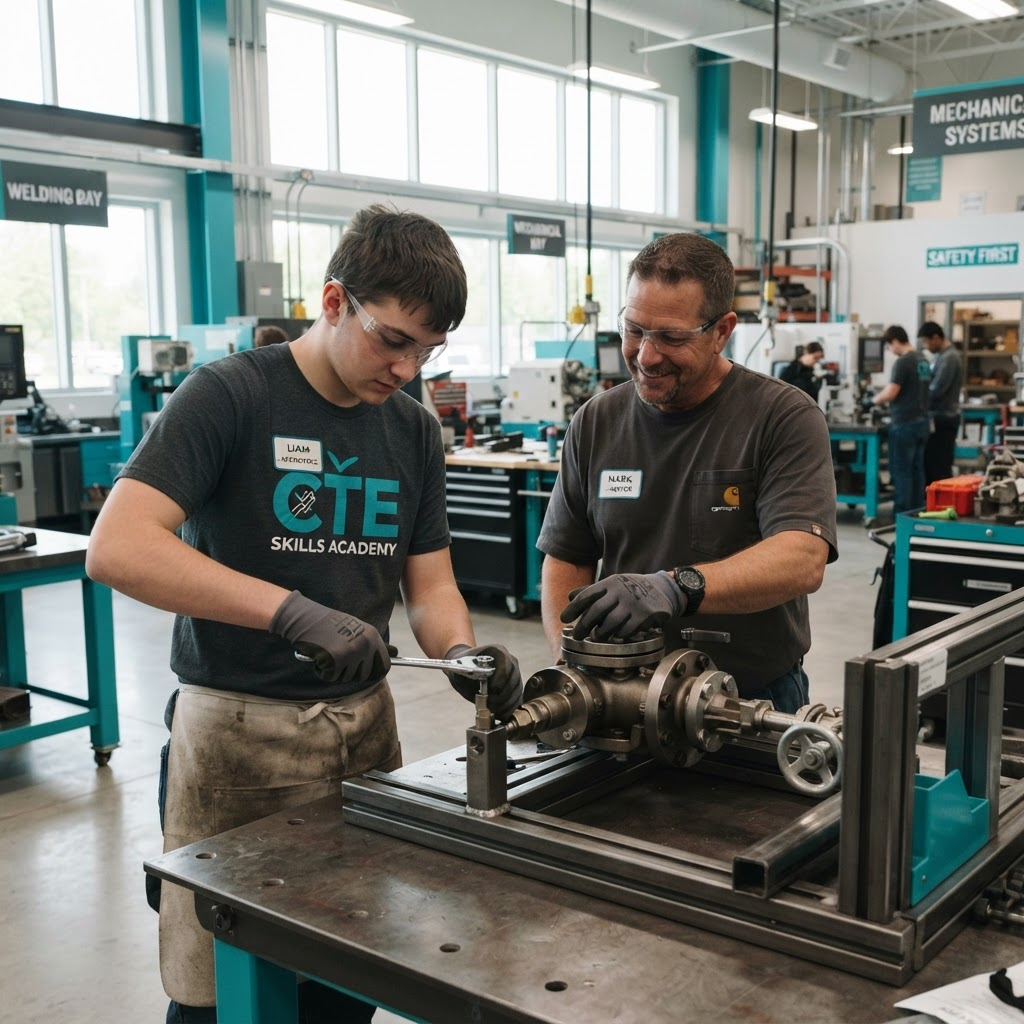
Students collaborating in a work-based learning environment
About the Author
WBL Tracker Team
Work-Based Learning Specialists
The WBL Tracker team consists of former educators and coordinators who understand the challenges of managing work-based learning programs. We're dedicated to helping schools save time and improve student outcomes.
Ready to Transform Your WBL Program?
Join coordinators who are saving 10+ hours per week with automated tracking and compliance reporting.