A practical, week-by-week guide for new Work-Based Learning coordinators — or seasoned CTE folks inheriting a program that needs a reset.
If you've just been handed a Work-Based Learning portfolio — whether you're a brand-new coordinator, a CTE teacher who got "voluntold," or a director rebuilding a program after a predecessor left — the first 90 days will define the next three years. I've seen too many coordinators spend their first quarter chasing timesheets and putting out fires, only to look up in November and realize they have no employer pipeline, no advisory committee, and no defensible data for their Perkins V Consolidated Annual Report (CAR).
This is the playbook I wish someone had handed me on day one. It's organized into three 30-day phases — Listen, Build, Launch — with concrete deliverables at each milestone. If you follow it, by day 91 you'll have a functioning program with real placements, a working compliance backbone, and a board-ready narrative.
Why the First 90 Days Matter More Than You Think
WBL is unusual among CTE responsibilities because it spans three worlds that don't naturally talk to each other:
- The school world — bell schedules, IEPs, FERPA, transportation, transcripts
- The employer world — workers' comp, insurance, supervisor capacity, labor needs
- The compliance world — Perkins V indicators, state CTE rules, FLSA child labor regulations, federal nondiscrimination requirements
In your first 90 days, you're not just learning a job. You're establishing yourself as the trustworthy bridge between those three worlds. If you skip the listening phase and dive straight into placements, you'll build on sand. If you over-listen and never ship, you'll lose credibility with your principal before winter break.
The 30-30-30 framework below balances both.
Days 1–30: Listen, Audit, and Map the Terrain
Resist the urge to immediately call employers, redesign forms, or "fix" anything. Your first 30 days are reconnaissance.
Week 1: Internal Stakeholder Listening Tour
Schedule 30-minute conversations with everyone whose work touches WBL. Use the same five questions every time so you can compare notes later:
- What's working in our current WBL program?
- What's broken?
- What does success look like for you?
- Who else should I be talking to?
- What's the one thing nobody tells the new coordinator?
Your minimum interview list:
- Your principal or CTE director — understand their political priorities and what they're being measured on
- The previous coordinator (if reachable) — invaluable institutional memory
- CTE pathway teachers — they own student readiness
- The counseling office — they own scheduling and graduation requirements
- The special education department — IEP transition planning is non-negotiable
- The MTSS / EL coordinator — equity in placements starts here
- District-level CTE/Perkins person — they hold the compliance keys
- The business office — workers' comp, MOUs, insurance questions live here
- Transportation director — can students actually get to placements?
- The IT/Data person — find out who runs your SIS exports
Week 2: Document Audit
Pull every document the program has produced in the last two years. Don't read them yet — just inventory what exists. Look for:
- Training agreements / training plans
- Memoranda of Understanding (MOUs) with employers
- Student applications
- Parent/guardian consent forms
- Timesheets (paper and digital)
- Employer evaluation rubrics
- Site visit logs
- Insurance certificates
- Perkins V reporting submissions from the last two cycles
- State CTE reporting submissions
- Anything labeled "transportation waiver," "early release," or "off-campus"
Build a simple inventory spreadsheet: Document Name | Last Updated | Owner | Current Status (Active / Outdated / Missing). This becomes your gap analysis.
Week 3: Compliance Baseline
This is where most new coordinators panic. Don't. You're not going to fix everything in week 3 — you're going to map what should exist so you know what to prioritize.
Pull and skim, at minimum:
- Perkins V Indicators (1S1, 2S1, 2S2, 2S3, 3S1, 4S1, 5S1–5S4) — particularly 2S3 (post-program placement) and any state-defined WBL participation indicator. Know which ones your program directly influences.
- Your state CTE division's WBL definitions — almost every state has an official rubric defining what counts as WBL vs. career exploration. Find it, print it, highlight the hour thresholds.
- FLSA Child Labor regulations (29 CFR Part 570) — specifically Hazardous Occupations Orders (HO 1–17) for 16- and 17-year-olds and the broader prohibitions for 14- and 15-year-olds.
- Your district's existing WBL board policy — usually buried in the policy manual under "off-campus instruction" or "cooperative education"
You don't need to memorize any of this in week 3. You need to know it exists and where to find it when an employer asks "can my 16-year-old run the band saw?"
Week 4: Student and Employer Snapshot
End your first month with a clean data picture:
- How many students are currently enrolled in WBL experiences? Broken down by program of study, grade, IEP/504 status, EL status, free/reduced lunch status, and gender
- How many active employer partners? Broken down by industry sector (use NAICS codes if your state requires them), distance from the school, paid vs. unpaid, and currently hosting vs. dormant
- How many hours has each active student logged in the current term?
- Which students are at risk of not meeting state hour thresholds for credit?
If your existing system can't answer these questions in under 10 minutes, you've found your single biggest infrastructure problem. This is the gap WBL Tracker was built to close — but even a clean spreadsheet beats nothing in month one.
Day 30 Deliverable: A 5–7 page internal memo to your principal or CTE director that includes (1) what's working, (2) what's broken, (3) compliance gaps, and (4) top 3 priorities for the next 60 days. Don't editorialize. Let the data do the talking.
Days 31–60: Build the Infrastructure
Now you build. Resist the temptation to recruit a single new employer until your infrastructure is solid. Coordinators who reverse this order end up with employers ghosting them because the back-office isn't ready.
Weeks 5–6: Lock Down the Paperwork
Standardize, in this order:
- Training Agreement / Training Plan template — the legal document defining the WBL relationship. It must name the student, employer, supervisor, learning objectives, hours, wages (if any), and the FLSA classification of the work. Have your district attorney or business office review it. Do not skip this.
- Parent/Guardian Consent Form — must explicitly cover transportation, FERPA disclosure to the employer, and acknowledgment of any non-school site supervision.
- Employer MOU — broader than the training agreement; this covers the ongoing relationship, insurance verification, EEO compliance, and supervisor designation.
- Site Visit Protocol — a short checklist coordinators use during the required site visits (most states require at least one per term, some more).
Every form should answer one question: "If a state CTE auditor showed up tomorrow, could I prove this placement is legitimate WBL and not just a part-time job?"
Week 7: Build Your Tracking Backbone
You need a system that captures, at minimum:
- Student demographics linked to your SIS
- Active placement records with employer, supervisor, hours, wages, and learning objectives
- Time logs verified by both student and supervisor
- Site visit records
- Document storage for signed agreements
- Reporting outputs for Perkins V indicators and state CTE requirements
If you're working from a spreadsheet, build it once and build it right. If you have a platform — whether that's WBL Tracker or something your district already licenses — invest the week in setup, employer/supervisor accounts, and clean data import. The two weeks you spend now will save you 100 hours over the school year.
Week 8: Equity and Access Audit
Before you launch placements, run this gut check against your current and pipeline students:
- Are students with IEPs represented in your WBL roster proportionally to their enrollment in CTE programs of study? If not, why not?
- Are EL students placed in environments where language support exists, or are they being filtered out by employer preference?
- Do your placement requirements (GPA cutoffs, attendance thresholds, transportation requirements) screen out students that Perkins V's Special Populations indicator (5S1–5S4) is specifically designed to serve?
- Are your unpaid placements concentrated among students who can least afford unpaid work?
Equity in WBL is not optional under Perkins V — it's measured, reported, and tied to your continuous improvement plan. Better to find the gaps in week 8 than to be flagged in your CAR.
Day 60 Deliverable: A program operations manual — even a 15-page version — that contains your standardized forms, your tracking workflow, your site visit protocol, and your equity commitments. Share it with your CTE director and your advisory committee chair.
Days 61–90: Launch, Recruit, and Show Early Wins
Now you can finally do the work everyone thinks WBL coordinators do all day — talk to employers and place students.
Week 9: Activate Your Employer Pipeline
Start with the warmest leads:
- Employers from your advisory committee (or your CTE pathway advisory committees)
- Employers who hosted in the prior year — even dormant ones
- Parents and family members of current CTE students
- Local Chamber of Commerce members
- Sector-specific industry associations (Associated Builders & Contractors for trades, state hospital associations for health science, etc.)
For each warm lead, send a personalized email that does three things in under 200 words: (1) introduces you by name, (2) names the specific program of study and the number of students looking for placements, and (3) asks for a 15-minute exploratory call. Track responses in your CRM or tracking platform. Scaling that pipeline later gets far easier when you start it systematically now.
Week 10: Run Your First Cohort of Placement Conversations
In the first round of employer meetings, you are not selling. You are listening for:
- What roles do they actually have open?
- What's their supervisor capacity? (One supervisor = one student, usually)
- What's their insurance and HR comfort level with minors?
- What FLSA classification will the work fall under?
- What credentials or skills do they want students to bring?
A coordinator who shows up with a sector-specific briefing on industry-recognized credentials (CompTIA, NIMS, OSHA 10, CNA, ServSafe, etc.) earns instant credibility.
Week 11: Place the First Cohort
Your first 5–10 placements set the template. Over-prepare:
- Match students to employers based on documented student career goals and demonstrated employability skills — not on who needs to fill seat hours
- Confirm training agreements are signed before day one on site
- Conduct a pre-placement meeting with the student, parent, supervisor, and you in the room (Zoom counts) — set expectations explicitly
- Verify FLSA hours-of-work rules for 14–15-year-olds and Hazardous Occupations restrictions for 16–17-year-olds before the placement starts
- Schedule your first site visit within the first 10 working days
Week 12: Show the Win
End your 90 days by closing the loop with the people who hired you. Prepare a one-page report for your principal, CTE director, and superintendent. Include:
- Number of active placements (with demographics)
- Number of active employer partners (with industry breakdown)
- Total verified student hours
- Compliance gaps closed
- Top three risks for the next semester
- Your ask — what you need (budget, time, support) to scale
This document is your insurance policy. When the November board meeting hits and someone asks "what's the new coordinator actually doing?" — your principal already has the answer.
Day 90 Deliverable: A live, operational program with verified compliance infrastructure, a defensible data picture, a working employer pipeline, and visible early wins.
What to Do If You're Behind
If you're reading this in month two or three and realizing you skipped phase one, don't restart from scratch. Compress: spend a single week catching up on the listening tour and the document audit, then jump into wherever the playbook puts you. The framework matters more than the calendar.
A Word on Sustainability
The reason most WBL coordinators burn out in year two is that they never built the systems that make year one repeatable. The first 90 days aren't about heroics — they're about installing the rails so that recruiting the 20th employer, placing the 50th student, and filing the third year's Perkins V report doesn't require reinventing your job every August.
Build the infrastructure once. Use it forever. Hand it cleanly to your successor when you move up. That's the difference between a coordinator who runs a program and a coordinator who builds one.

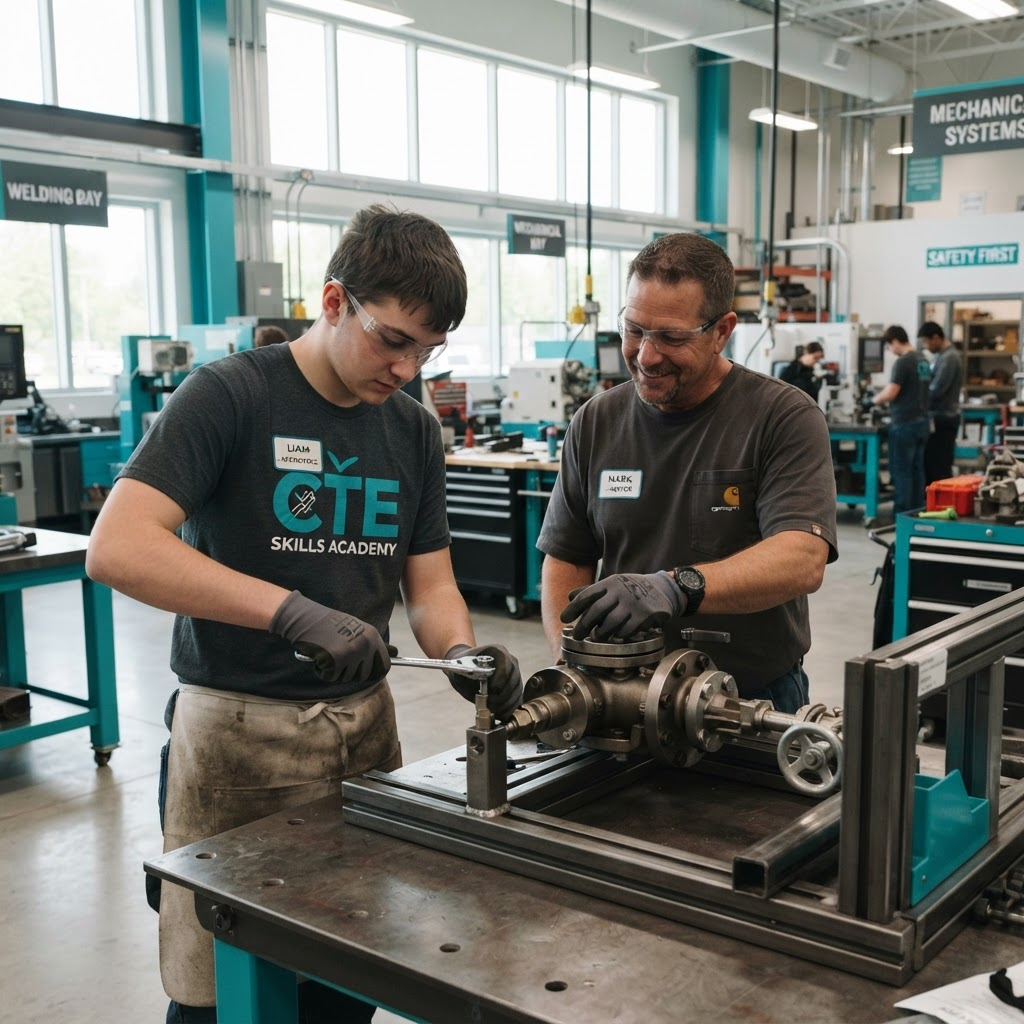
Students collaborating in a work-based learning environment
About the Author
WBL Tracker Team
Education Technology Experts
The WBL Tracker team consists of former educators and coordinators who understand the challenges of managing work-based learning programs. We're dedicated to helping schools save time and improve student outcomes.
Ready to Transform Your WBL Program?
Join coordinators who are saving 10+ hours per week with automated tracking and compliance reporting.